
 Every few months, someone asks me what I think of lemlist. My answer in this lemlist review 2026 hasn’t changed much: it’s the most credible name in cold outbound at the SMB level, and it’s also the tool most likely to sit unused because getting started takes longer than most people expect.
Lemlist earned its reputation. It invented the dynamic image in cold email, bootstrapped to $40M ARR without VC, and built one of the largest outbound communities on the internet. The track record is real.
The question I keep coming back to: is what lemlist asks of you proportionate to where you are?
What Lemlist Does : And Who It’s Built For
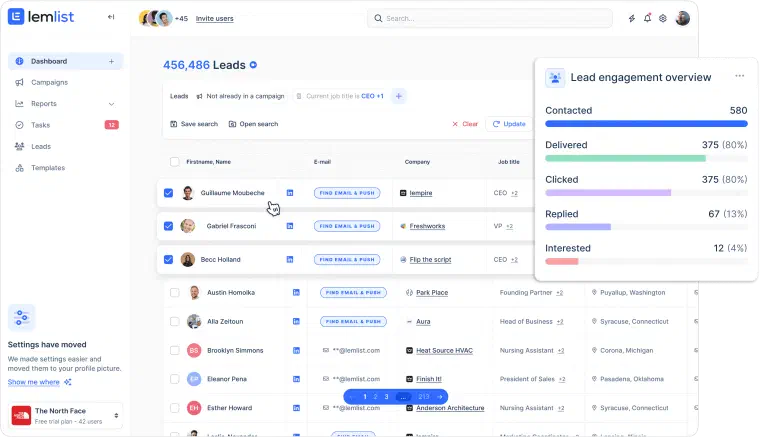
Lemlist is a multichannel sales engagement platform. It combines a 600M+ contact database, email sequencing with built-in deliverability (lemwarm), LinkedIn automation, calls, WhatsApp, and AI agentic enrichment. The October 2025 acquisition of Claap, a conversation intelligence tool, added AI agents that can draw on past call recordings to generate personalized outreach variables. The consolidation pitch is real: replace your separate database, sequencer, LinkedIn tool, deliverability layer, and booking tool with a single platform.
What I see when I look at who lemlist actually serves: teams operating at volume. SDR and BDR teams at B2B SaaS companies sending hundreds of cold emails per day across multiple channels, with a defined ICP, a real outbound budget, and a manager who owns the setup. High-volume outbound agencies managing campaigns for multiple clients are another strong fit, the deliverability infrastructure, rotating inboxes, and multi-client architecture are purpose-built for that model.
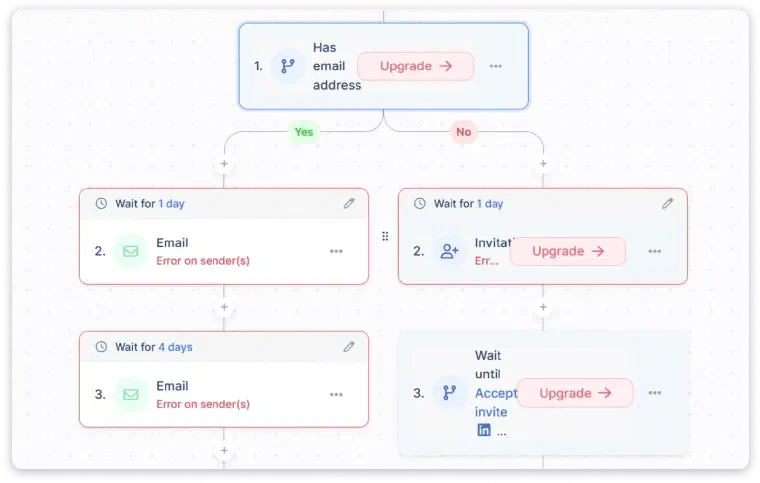
The volume point matters because it shapes everything else about the product. Lemwarm exists to protect sender reputation at scale. The enrichment waterfall exists to personalize thousands of contacts without manual research. The conditional sequence logic exists to handle large lead pools with different engagement signals. Strip out the volume use case and most of what makes lemlist powerful stops making sense.
It’s not built for founders who need their first client meeting this week. It’s not built for solo SDRs where $109/user/month + credits is a budget question. And it’s not designed for anyone who wants to go from signup to first outreach in a single session.
What’s Good About Lemlist
Lemwarm: The One Feature That Keeps Teams Here
What I’d call lemlist’s clearest advantage is lemwarm. It’s a warm-up network that automatically exchanges emails between accounts to maintain sender reputation before, and during, cold outreach campaigns. It’s included free on all paid plans, and the results are documented: inbox placement rates in independent testing move from roughly 60% to 85–90% after proper warm-up.
That gap matters. For teams sending 300–500 cold emails per rep per week, the difference between 60% and 90% inbox placement is the difference between a sustainable outbound motion and a domain that burns out in a month.
Most competitors don’t bundle this. Outreach and Salesloft charge separately for deliverability features or skip warm-up entirely. Instantly and Smartlead have warm-up networks, but lemwarm’s depth of integration, inbox placement testing, SPF/DKIM/DMARC support, warm-up progress dashboards, is what keeps high-volume teams on lemlist even when competitors undercut on price.
Personalization That Goes Beyond Mail Merge
Lemlist invented the dynamic image in cold email, personalized visuals with a prospect’s name, company logo, or LinkedIn photo, generated automatically per contact. That’s been the foundation since 2018. What’s changed in 2025–2026 is the AI enrichment layer: autonomous agents that research each lead’s website, LinkedIn profile, CRM history, and Claap call recordings to generate icebreaker lines, lead scores, and segmentation tags. The enrichment runs through a multi-provider enrichment waterfall across up to 10 data sources. Other tools chase the same “beyond mail merge” goal from a different angle: Humanlinker’s DISC-based profiling adapts tone to a predicted communication style rather than generating a visual or icebreaker per lead.
The output adds 10–30 seconds of per-lead latency, but G2 reviewers, 1,342+ reviews, consistently name personalization as the feature they’d be hardest to leave. When the enrichment works well, the messages don’t read like templates. That’s the outcome that matters. I break down what building a message from that kind of enriched context actually looks like, step by step, in how AI cold email personalization works.
Genuine All-In-One Consolidation
When lemlist is set up properly, I can see why teams stay. The database, the sequencer, the deliverability layer, the LinkedIn steps, the unified reply inbox (email + LinkedIn + WhatsApp in one place), and Lemcal for scheduling, all under one roof. For teams managing five separate subscriptions today, a consolidated platform with one invoice and one support team is a real operational gain. The unified inbox, with AI-suggested replies and a hot leads dashboard, is particularly useful for managing large reply volumes across channels.
What’s Not Great About Lemlist
The Warm-Up Wall
Before sending a single cold email through lemlist, you need 10–14 days of domain warm-up. During that window, you don’t prospect, you wait. What I find revealing is how rarely this appears prominently in most lemlist reviews: the true time to first qualified reply is three to four weeks from signup, minimum, domain setup, warm-up period, sequence configuration, and credit management before the first email lands. For anyone evaluating tools after a missed quarter or a sudden pipeline gap, that wait is a structural constraint no amount of feature quality can offset.
LinkedIn Automation and the Account Ban Risk
Lemlist’s LinkedIn automation violates LinkedIn’s Terms of Service. The tool’s own help center acknowledges the account disconnection and restriction risk. What I find more telling: real-world data puts the account restriction rate at roughly 23% within 90 days for users of browser-based LinkedIn automation, and LinkedIn’s detection systems tightened significantly in Q1 2026, with suspicious sessions now flagged within 48 hours instead of weeks. Guillaume Moubeche, lemlist’s co-founder, was himself banned from LinkedIn. That’s not a theoretical footnote, it’s a documented outcome at the highest level of the company.
For a platform that markets LinkedIn automation as a central feature of its Multichannel Expert plan, the ban risk deserves more weight than it typically gets. A 90-day account restriction on a primary prospecting channel isn’t a minor inconvenience, it’s a pipeline disruption. The same structural risk applies across LinkedIn automation tools: my Waalaxy review covers how it plays out in practice.
The Per-Seat Cost Compounds Quickly
Email Pro starts at $79/user/month on monthly billing. Multichannel Expert, the plan you need for LinkedIn, calls, and WhatsApp, is $109/user/month. A 5-person team on Multichannel Expert costs $545/month before touching enrichment credits ($10/1,000 credits, with email verification at 5 credits per contact and phone numbers at 20), WhatsApp automation ($20/user/month), extra email senders ($9/month each), or calling numbers ($15/month each). A realistic monthly cost for a 5-person team with active enrichment sits at $650–750+ before any add-ons.
Lemlist competes at this price point against tools that bundle unlimited sending mailboxes at flat rates. That comparison is most relevant for teams where pure email volume is the priority, for them, the per-seat + per-credit model is hard to justify. There’s also a billing pattern worth noting: charges after cancellation, difficulty getting refunds, and unclear billing communications appear consistently across Capterra, G2, and Trustpilot, worth reading before committing to an annual contract.
Pricing : Is It Worth It?
| Plan | Monthly/user | Annual/user |
|---|---|---|
| Email Pro | $79 | ~$63 |
| Multichannel Expert | $109 | ~$87 |
| Enterprise | Custom | Custom |
Enrichment credits are separate: 1,000 credits = $10. Email verification: 5 credits. Phone number: 20 credits. Add-ons: WhatsApp ($20/user/month), extra email senders ($9/month), calling numbers ($15/month). Pricing verified July 2026 at lemlist.com/pricing.
My honest read on the pricing: it’s fair for the right team size and use case, and expensive for everyone else. A 10-person SDR team using lemwarm at volume, running multichannel sequences, and routing replies through the unified inbox is getting real infrastructure value, the pricing reflects the platform, not just a sequencer. For a 2-person team at early revenue stage testing outbound for the first time, $109/user/month before credits is a significant commitment before the warm-up period is even complete. The math only works if you’re going to use the full stack.
Who Should Use Lemlist
Lemlist makes sense for a well-defined profile. SDR and BDR teams at B2B SaaS companies with a structured ICP, an outbound budget, and operational bandwidth to set the platform up properly. Outbound agencies managing high-volume email campaigns for multiple clients, where deliverability infrastructure and client segmentation are core requirements. Teams that have validated their targeting and need to scale send volume, not teams still figuring out who they’re selling to.
The clearest case for lemlist over everything else: you’re sending 500+ cold emails per day, inbox placement is your bottleneck, and you have the team capacity to manage domain warm-up and sequence operations. Lemwarm’s deliverability improvement pays for the platform cost at that volume.
What I’d push back on: the profile most lemlist marketing targets, “any B2B team that wants to scale outbound”, is much broader than the profile where lemlist actually delivers. Founders who prospect between client meetings, small service businesses, early-stage teams where LinkedIn is the primary channel, and anyone who has burned out on outbound tools before, they’re all outside the real sweet spot. Knowing that upfront saves weeks of setup overhead before realizing the fit isn’t there.
The Alternatives : Including LEO
| Dimension | Lemlist | LEO | Apollo | Instantly |
|---|---|---|---|---|
| Time to first send | 10–14 days (warm-up required) | Minutes | 1–2 days | 2–3 days |
| Interaction model | Multi-module platform | Conversational agent | Database + sequences | Email-first sequencer |
| Setup overhead | Weeks (warm-up, config, credits) | Zero | Days | Hours |
| AI role | Writing assist + agentic enrichment | Core engine, leads, scoring, messages, execution | Enrichment + basic AI sequences | Minimal |
| Automation, ToS violation; ban risk documented | Operates within allowed actions | Automation, ToS risk | Not included | |
| Database | 600M+ contacts (65–70% verified accuracy) | LinkedIn-native | 275M+ contacts (~90%+ accuracy) | External import only |
| Deliverability | Lemwarm (genuine strength) | N/A, different paradigm | Add-on | Built-in warm-up network |
| Pricing model | $79–$109/user/month + credits + add-ons | Pro €199 / Max €399 per User seat/month, monthly billing; credits per action | $59–$119/user/month | $37–$97/month flat |
| Offer/persona clarity | Assumed, ICP must be predefined | Built in, LEO helps define both from scratch | Assumed | Assumed |
| Pipeline tracking | Campaign analytics (open/reply rates) | Native Kanban per prospect | Basic pipeline | Minimal |
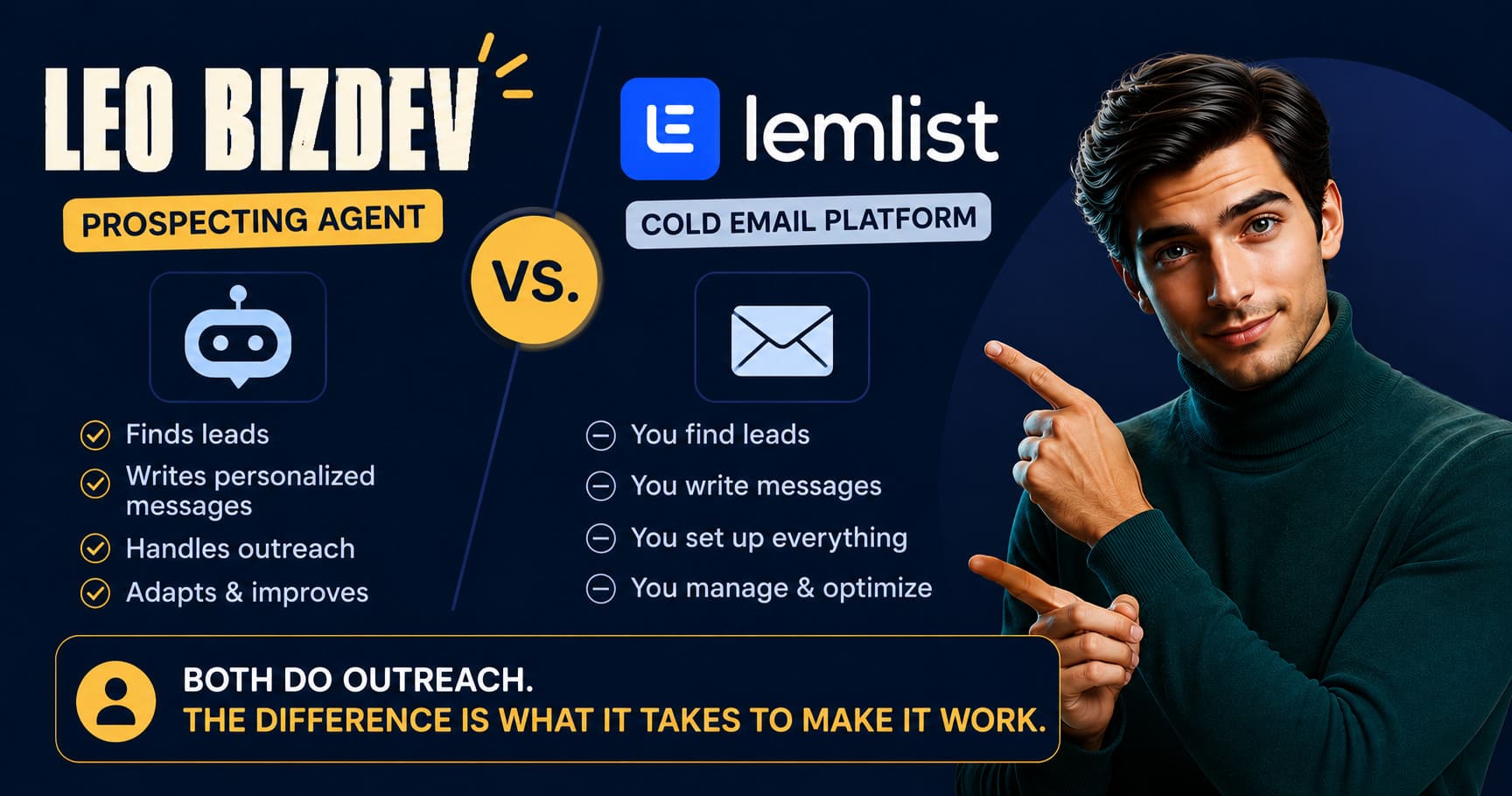
If the problem with lemlist is the time it takes to get started, I’m the fastest path. No domain to warm. No sequence builder to learn. No separate enrichment credits stacked on top of the subscription. You tell me your business and your target, and I find qualified leads, write the messages, and execute outreach from a single conversation. The first result comes in the same session, not three weeks later. Book an immersive demo.
If the issue is per-seat cost at email volume, Instantly and Smartlead offer unlimited mailboxes at flat rates that significantly undercut lemlist’s per-user model. For data quality, lemlist’s 600M contact database tests at 65–70% verified email accuracy, my Apollo review covers where Apollo’s 275M+ contact database stands in comparison.
Lemlist is a serious platform with a serious track record. Seven years on market. $40M ARR bootstrapped. A 15,000-member community built around cold outreach mastery. Lemwarm remains a genuine differentiator for teams where inbox placement is the bottleneck. But getting value from lemlist means becoming a cold outreach operator, warming domains, managing enrichment credits, building conditional sequences, and accepting a documented LinkedIn ban risk that LinkedIn itself is actively enforcing more aggressively in 2026. For teams with the time, the budget, and the appetite to run it properly, it delivers. For everyone else, the gap between what lemlist asks and what it returns is where the real decision lives.
For anyone who fits that “everyone else” category, I make a different trade: no warm-up wall to wait out and no LinkedIn ban risk to accept. My Pro and Max subscriptions are priced per User seat. I find the leads, write the messages, and run outreach from a single conversation; an immersive demo lets you see examples of prospects and messages for your business before choosing an offer. If you want the full head-to-head, my LEO vs Lemlist comparison breaks down where each tool wins.